North Harris County
Roof Repair in Spring, TX
Tell us what your roof is doing in Spring. We come out, find the source, and tell you plainly what it needs. Free estimate, no obligation.
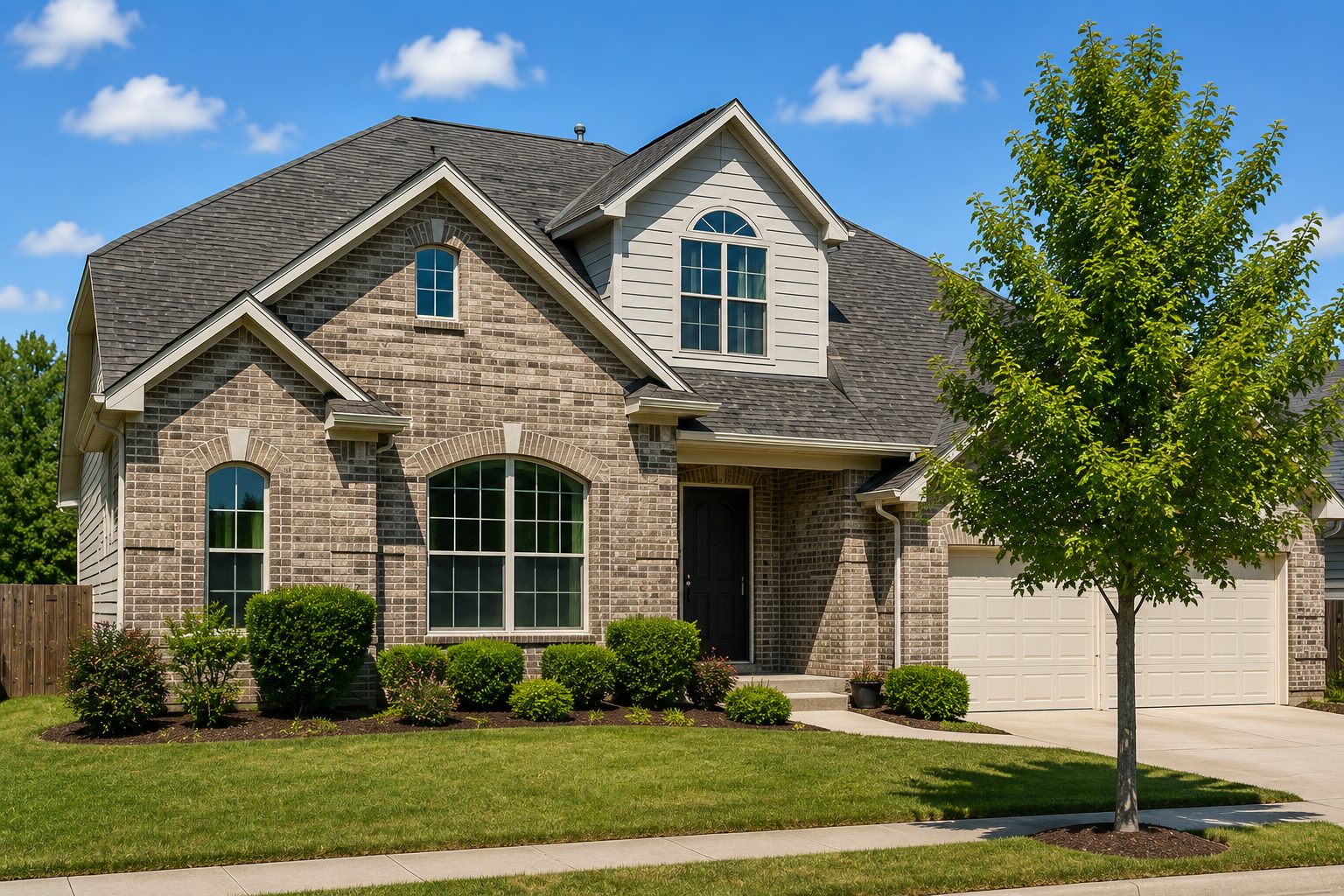
What roofs do around here.
Spring combines heavy tree canopy with a lot of housing that has been standing long enough to be on its second roof. That pairing tends to produce attic problems rather than dramatic ones — shaded roof planes staying damp, debris in the valleys, soffit vents that stopped breathing years ago and an attic that has been quietly cooking the shingles from underneath ever since.
Pines are a different problem from oaks
Spring sits on the edge of the Piney Woods, and the loblolly pines that come with that are hard on roofs in their own particular way. They are tall enough to overhang a two-story roof, they shed year-round rather than in one autumn, and what they shed is needles.
Needles behave differently from leaves. They knit together into a dense mat that water runs through slowly rather than over, and they pack into valleys and behind chimneys where they sit directly on the shingles holding moisture. They also fill gutters in a way that is easy to miss from the ground, because the mat looks like part of the gutter.
The consequence is a roof that stays wet longer than it should in the places least able to cope with it. If you have pines over the house, clearing valleys and gutters is not maintenance you can skip a year of.
The problems here are usually slow ones
Heavy canopy means shade, and shade means roof planes that do not dry out. Combine that with an attic that has lost its intake airflow — which happens quietly whenever insulation gets blown toward the eaves and buries the soffit vents — and you have a roof being worked on from both sides.
From above, the covering stays damp for longer than it was designed for. From below, humid air sits against the underside of the decking with no way out, and condenses there. Decking that stays damp does not stay sound, and shingles over a hot, unventilated attic age faster than their rating assumes.
None of that announces itself. There is no dramatic failure, no obvious storm damage. What you get instead is a roof that reaches the end of its life noticeably early, and a homeowner who concludes they were sold bad shingles. Usually they were sold fine shingles and an attic that could not breathe.
What to do about it
If your roof failed sooner than it should have, the important thing is to find out why before you buy the next one, because otherwise the next one does the same. That means someone in the attic looking at the underside of the decking and at whether the soffit vents are actually open, not just present.
Dark staining or condensation on the underside of the decking is the tell. So is insulation packed hard against the eaves. Both are fixable, and both are far cheaper to fix while a roof is being replaced than afterwards, because the roof is already open.
The other half is the trees. Keeping limbs cut back from the roof plane and valleys clear of needle litter costs very little and removes most of what makes this area hard on roofs. It is the least glamorous roofing advice there is and it is the advice that saves the most money.
What to keep an eye on.
None of these means the roof has failed. They mean it is worth having someone look while the problem is still small — everything on a roof is cheaper to fix before it has been leaking for a season.
Spring is part of our northwest coverage alongside Tomball.
- Pine needles matted in valleys or packed behind a chimney
- Gutters that look clear from below but are full of needle litter
- Dark staining or condensation on the underside of the attic decking
- Insulation packed against the eaves where the soffit vents should breathe
- A shaded roof plane that stays visibly damp long after the rain stops
- A roof that failed noticeably earlier than the material was rated for
Roofing work we do here.
Roof Repair
Targeted repair for leaks, storm damage, failed flashing and missing shingles — without replacing a roof that does not need replacing.
Read more →Seen firstEmergency Roof Repair
Active leaks, storm damage and exposed decking — requests that cannot wait for a scheduled inspection.
Read more →Full replacementRoof Installation
Complete residential roof replacement when repair is no longer the sensible answer.
Read more →The middle optionRoofing Restoration
Correcting the failing areas of an aging roof to buy real years — when the system underneath is still sound.
Read more →Often the real causeAttic Ventilation Installation
Correcting attic intake and exhaust airflow — the problem underneath a surprising number of roof failures.
Read more →The roof edgeSoffit and Fascia Replacement
Replacing the rotted boards at the roof edge — where gutters mount, where soffit vents breathe, and where squirrels get in.
Read more →Roofing in Spring — what people ask.
My roof did not last as long as it should have. Why?
In this area the most common answer is attic ventilation, not the shingles. Heat and humid air with no way out of the attic age the covering from underneath, and the intake side has usually been blocked at some point by insulation blown toward the eaves. It is worth having someone look before you buy the next roof, because otherwise the next one gets the same treatment.
Are pine needles actually a problem?
More than leaves, yes. They mat together into a dense layer that holds water against the shingles rather than shedding it, and they pack into valleys and gutters where they are easy to miss from the ground. With pines over the house, clearing valleys and gutters is a regular job rather than an occasional one.
How do I know if my attic is ventilating properly?
If you can get into the attic safely, look at the underside of the decking for dark staining or condensation, and look along the very edge where the roof meets the exterior wall to see whether insulation is packed against the soffit. Visible soffit vents from outside mean nothing if they are blocked on the inside, which is the usual failure.
Do you cover Spring?
Yes. Spring is part of our northwest coverage alongside Tomball. Cypress is our primary market and tends to be quickest, but Spring is well within coverage. If your address sits out toward the edge of the area, we would rather say so than book a visit we cannot keep.
How much does it cost to repair a roof in Spring?
Repairs vary far more than replacements, because the price follows what actually failed. A split vent boot or a short run of flashing is a small job; a valley rebuilt with rotten decking under it is not. What moves the number is how far the damage runs, whether the decking is sound, the pitch and access, and how many layers are already up there. For scale at the other end, published figures put most Houston-area reroofs with architectural asphalt somewhere around $7,500 to $16,500 in 2026. A lot of Spring housing is on its second roof already, and heavy canopy over it tends to produce attic problems rather than dramatic ones — which are cheaper to fix early and considerably more expensive once the decking has been damp for a season.
How long do roofs last in Spring?
Published figures for the Houston area put asphalt shingle roofs at roughly 15 to 25 years. In Spring the combination that shortens it is tree cover plus age: shaded planes staying damp, debris sitting in valleys, and an attic that never quite dries out working on the shingle from underneath.
What does a Spring roof estimate cost?
Nothing. We do not charge to come out and we do not charge for the written estimate. Free estimates are the norm for residential roofing here, so a fee just to look at your roof is worth questioning wherever you are getting quotes.
Do you do the work yourselves?
Yes. Our own crews do the repairs and replacements. We are a service-area business, so we work on your roof rather than out of a shopfront.
Other areas we cover.
Roof trouble in Spring?
Free written estimate, no obligation. Call or send the form.
Free · No obligation · We are a roofing service, not a contractor