The middle option
Roofing Restoration in Cypress, TX
Correcting the failing areas of an aging roof to buy real years — when the system underneath is still sound.
What this actually is.
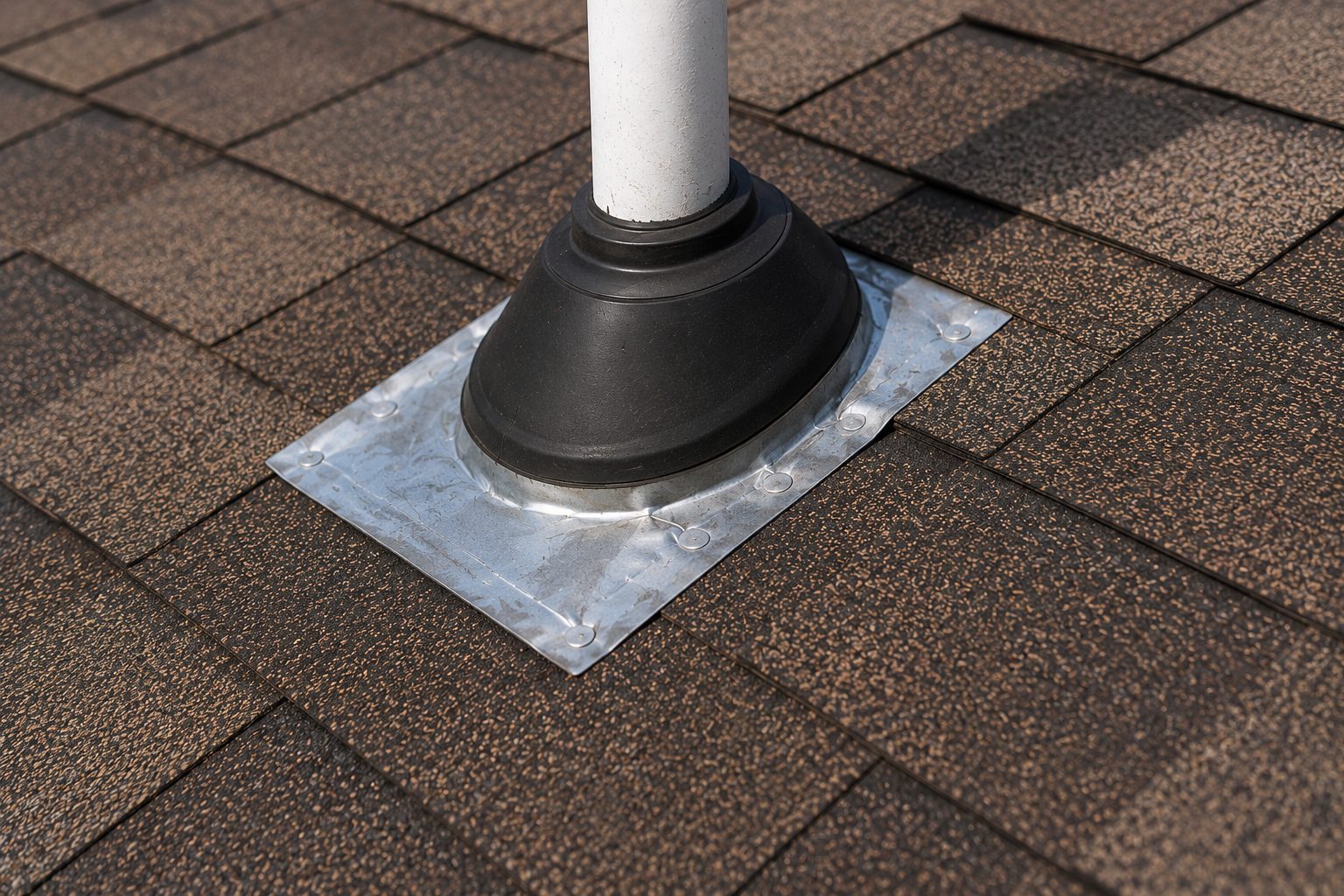
Restoration is the option most homeowners never get offered, because it sits between the two answers contractors are used to giving. It applies when a roof is worn but structurally fine: the decking is solid, the field is intact, and what has actually failed is the flashing, the sealant, the boots around penetrations and a limited number of shingles.
We go over the whole roof and list every component that has failed or is close to it, then correct those specifically instead of replacing a structure still doing its job. You get a straight number for how many years that should buy, with the reasoning attached.
- A roof that is aging but has never had a structural problem
- Cracked or brittle pipe boots and vent seals
- Flashing that has separated but sits on sound decking
- Isolated wear rather than field-wide material failure
- You need a few more years before budgeting a replacement
The difference between this and a repair
A repair is reactive. Something failed, you noticed, someone fixes that thing. Restoration is the opposite order: a contractor goes over the whole roof, finds every component that has worn out or is close to it, and deals with all of them in one visit.
On an aging roof that distinction is the whole point. The components that fail — pipe boots, sealant, exposed fasteners, flashing at walls and chimneys — all went on at the same time and have all had the same weather. When one goes, the others are usually not far behind. Fixing them one at a time as they announce themselves means paying a call-out charge every few months for years.
It is worth saying plainly that restoration is not a product and there is no industry-standard definition of it. What matters is the scope on the page: which components are being replaced, which are being left, and why.
Whether your roof actually qualifies
Two things have to be true. The decking has to be sound, and the covering itself has to have serviceable life left in it. If either has gone, restoration is money spent on a roof that still needs replacing, and a contractor who takes the job anyway is doing you no favors.
The honest test is what the roof looks like away from the failures. If the shingles across the open field are still flexible, still holding their granules and still sealed down, the roof has time in it. If they are brittle, thin, curling at the edges across whole planes, or shedding granules heavily into the gutters, the field is going and the components are just the first thing you noticed.
We walk the roof and tell you which of those we are looking at, with photographs. Getting a clear no is a good outcome — it saves you spending on a roof that needs replacing within a couple of years anyway.
What it buys, and what it does not
What it buys is time, on a roof you are not ready to replace. That is a genuine and often sensible thing to want. Roofs rarely fail on the schedule your finances would prefer, and a few more years of planning is worth paying for.
What it does not do is reset the clock. The covering is still the age it was, and it will still reach the end of its life on roughly the schedule it was always going to. Anyone presenting restoration as an alternative to eventual replacement is selling you something that does not exist.
So the useful question to put to a contractor is not whether it will work but how long it should hold. A straight answer — a range, with the reasoning behind it — tells you whether the spend makes sense against simply putting the same money toward the replacement. Sometimes it clearly does. Sometimes it clearly does not, and a contractor willing to say so is one worth keeping.
What moves the price.
We do not price a roof we have not been on. These are the things that actually move the number once we have.
How many components have failed
The scope is a count, not an area. A roof with a handful of split boots and one separated flashing detail is a different job from one where every penetration, every wall transition and the whole ridge need attention.
Roof size and access
The crew still has to cover the whole roof to inspect it properly, so a large or steep roof costs more even when the list of failures is short.
Matching the existing material
Replacement shingles on a weathered roof rarely match perfectly, and a discontinued or unusual profile may be difficult to source at all. That affects both the price and how the finished job looks.
Ventilation work
If the attic underneath has been cooking the roof, correcting airflow is often quoted alongside, because otherwise the restored components age at the same accelerated rate the originals did.
What to ask before you hire anyone.
Texas does not license roofing contractors, so the checks nobody did for you are the checks you make yourself. Four that are worth the awkwardness.
- Which components are you replacing, and which are you leaving?
This is the scope, and it is the only way to compare one restoration quote against another. A quote that just says restoration and a price is not telling you what you are buying. - How many years should this realistically buy me?
You are buying time, so the amount of time is the product. A contractor who will not give you a range, or gives you one that sounds like a new roof, is worth being skeptical about. - What happens if the decking turns out to be soft?
It changes the answer entirely. Agree now what happens if they open something up and find rot, rather than finding out mid-job that the plan no longer applies. - Can you show me photographs of what is failing?
You cannot see your own roof, which makes this the one trade where you are almost entirely dependent on being told the truth. Photographs of each failed component, and of the field, cost the contractor nothing to provide.
What happens after you call.
Tell us what the roof is doing
Call or send the form. A leak in the hall ceiling, missing shingles after a storm, a stain that keeps growing — whatever you are actually seeing. You do not need to know the cause.
We come and find the source
We look at the roof plane, the attic side, and the components most likely to be responsible. The wet spot is rarely under the hole, so we trace it rather than guess at it.
You get a plain explanation and a price
What failed, what it will take to fix, and what can reasonably wait. In writing, in language that does not need decoding.
We do the work
Scoped to what we actually found. If a targeted repair solves it, that is what we quote — we are not looking for a reason to sell you a roof.
Roofing Restoration — what people ask.
Is restoration just an expensive repair?
No. A repair fixes one failure. Restoration systematically addresses every worn component across the roof so you are not calling someone back every few months for the next one.
How do I know if my roof qualifies?
The decking has to be sound and the field material has to have life left. If either has gone, restoration is money spent on a roof that still needs replacing.
Will it match the existing roof?
Replacement shingles on an aged roof rarely match perfectly — the existing material has weathered. We will show you where the new material will be visible before anything goes on.
Does restoration mean a coating?
Not here, usually. Coatings are a real technique on flat and low-slope commercial roofs, but the term also gets used loosely by people selling a spray-on treatment for residential shingle roofs. If someone proposes coating your shingles, ask what the manufacturer of those shingles says about it, because it can void the warranty.
Will it help when I sell the house?
It helps in that a buyer's inspector finds fewer defects, and defects are what get negotiated off the price. It does not let you present the roof as new, and you should not try — the age of the covering is a matter of record and it will come up.
Is this covered by insurance?
Generally no. Policies deal with sudden damage, and restoration is by definition work on components that have worn out over time. If a storm damaged your roof, that is a different conversation and a different scope of work.
Can I just do the worst bits now and the rest later?
You can, and sometimes budget makes that the right call. Understand that you are choosing to pay for a second visit later, and that the components you leave will keep aging in the meantime. We rank the list by urgency so that if you do split it, you split it sensibly.
What is considered an old roof in Texas?
Past about fifteen years an asphalt roof starts being treated as old by people other than you — insurers and buyers in particular. That is a paperwork threshold rather than a structural one, but it has consequences: it is worth checking how your own policy handles an older roof, because some settle claims differently once a roof passes a certain age. Structurally, condition beats age every time, which is the whole premise of restoration work.
Should a 20 year old roof be replaced or restored?
It depends on whether the wear is general or concentrated. Restoration makes sense when the field of the roof is broadly sound and the problems are at the details — flashing, boots, a tired ridge. It stops making sense once the shingle mat itself is brittle across the plane or the decking has been wet. We would rather tell you which side of that line your roof is on than sell you the bigger job by default.
Other roofing work we do.
Need roofing restoration in Cypress?
Free written estimate, no obligation. Call or send the form.
Free · No obligation · We are a roofing service, not a contractor